
What to bring to an appointment about your GLP-1 or testosterone prescription
An appointment about a prescription you already take is a chance to put your own records in front of the person who prescribes it. The records that help most are short and accurate: what you took and when, what you noticed, what else you take, and the questions you don't want to forget halfway through the visit.
This guide covers what to bring, how to fit it on one page, and neutral questions to ask. It gives no medical advice: what you take, how much and when are decisions for you and your prescriber. Everything here works with a notebook or a spreadsheet.
What to bring
Your dose log, as you kept it. For each dose: the date and time, the amount with its unit, the route and, for an injection, the site. Bring the log you actually kept. If you clearly remember a dose you forgot to write down, add it, and leave anything you're unsure about blank rather than guessing. Review your dose history walks through that.
Missed or delayed doses, written down as such. A blank day could mean you didn't take a dose, or that you did and never recorded it, and a reader can't tell which. A short note ("didn't take", or "took it late, at this time") settles it. It's a record of what happened, and it leaves the judging to your prescriber.
How you've felt, in your own words. Dated notes that say what you noticed, how strong it was, how long it lasted and what else was going on that day. Keep what you observed apart from what you think caused it, and include quiet stretches. How to keep a side effect logcovers the habit. The National Institute on Aging also suggests telling your doctor about changes since your last visit, including things like sleep, energy and weight.
Weight and measurements, if you track them. Bring the dates and units. See how to weigh yourself consistently and how to measure your waist, hips and chest.
Your other medicines and supplements. The FDA recommends a written list of the prescription medicines, over-the-counter medicines, vitamins and supplements you take, with the name and strength of each, what it's for, and when, how and how much you take it. The same list should carry your allergies and emergency contacts. The NIA notes that some doctors prefer a list and others prefer that you bring everything in a bag, so ask the office which they want. Mention anything that changed since your last visit.
The label. A photo of your prescription label and packaging shows the exact product name and strength, and which pharmacy supplied it. Comparing it with your log catches a mismatch in a name or unit before the visit.
Practical papers. Insurance cards, and the names and phone numbers of other clinicians you see (NIA).
Your questions, in order of importance. The NIA suggests raising the most important ones first rather than saving them for the end.
A person, if you want one. The NIA notes that a family member or friend can remind you what you planned to discuss and take notes.
Put it on one page
Put a short summary on top and the detail behind it, so someone reading for two minutes knows what period it covers and what you want to discuss.
- Period covered: [start date] to [end date]
- Medicine as printed on the label: [name, strength, form]
- Doses: [number] recorded, [number] marked "didn't take", [number] with no record
- Things I noticed, with dates: [in your own words]
- Other medicines and supplements: [list]
- Changes since my last visit: [list]
- The three things I most want to discuss: [1], [2], [3]
A few habits make it easier to read:
- Use the units printed on your label. The same number in a different unit is a different amount.
- Check the date range. Make sure your first and last entries cover the period you mean.
- Ask how they want to receive it. A portal, a printout, a file or your phone at the visit may all work, and offices differ. Share your medication log with your doctor covers sending a file.
Questions to ask your prescriber
This guide doesn't answer these questions, because the answers depend on you, your medicine and your prescriber. Choose the ones that matter to you, put them in order, and add your own. The Agency for Healthcare Research and Quality (AHRQ) publishes a short list of questions for patients, and it includes asking how to spell the name of a drug, so no question is too basic. Write each answer next to its question in your own words, and if an answer isn't clear, ask the prescriber to say it another way.
About your records
- What should I record between now and my next appointment?
- Which details would you like to see in my log?
- How would you like to receive my records: through the patient portal, as a printout, as a file, or on my phone at the visit?
About your prescription
- Could you confirm what's written for me: the name, strength, form and how it's to be taken, so my log matches?
- What should I check on the label or packaging each time I pick up a refill?
- How do refills and renewals work, and who do I contact about them?
- Will this medicine interact with the other medicines and supplements I take?
About everyday logistics
- How should I store this medicine?
- What should I do if I miss a dose?
- How should I dispose of used needles, syringes or pens? (A general guide is safe sharps disposal at home.)
- Is there anything I should know before I travel with it? (See traveling with injectable medication.)
About getting in touch
- Who do I contact if something worries me, and how do I reach them outside office hours?
- What would you want to hear about between appointments?
About the next visit
- When is my next appointment, and what will we review at it?
- Is there anything you'd like me to bring next time?
During and after the visit
- Take notes, or ask your companion to. Write down each answer while you're still in the room.
- Ask for what matters in writing. A portal message or an after-visit summary is easier to check later than a memory of a conversation.
- Keep your records in step with what you were told. If anything about your plan changes, note the date and what you were told, and update your records to match the plan you follow with your prescriber. If your medicine, brand or pharmacy changes, keeping records when you switch medicines covers what to write down.
- Tidy up copies. Delete shared files you no longer need once the appointment is over. How to store your records safely covers where copies end up.
Remember your injection day covers routines and reminders for the day your prescriber has set.
How Peptimes helps
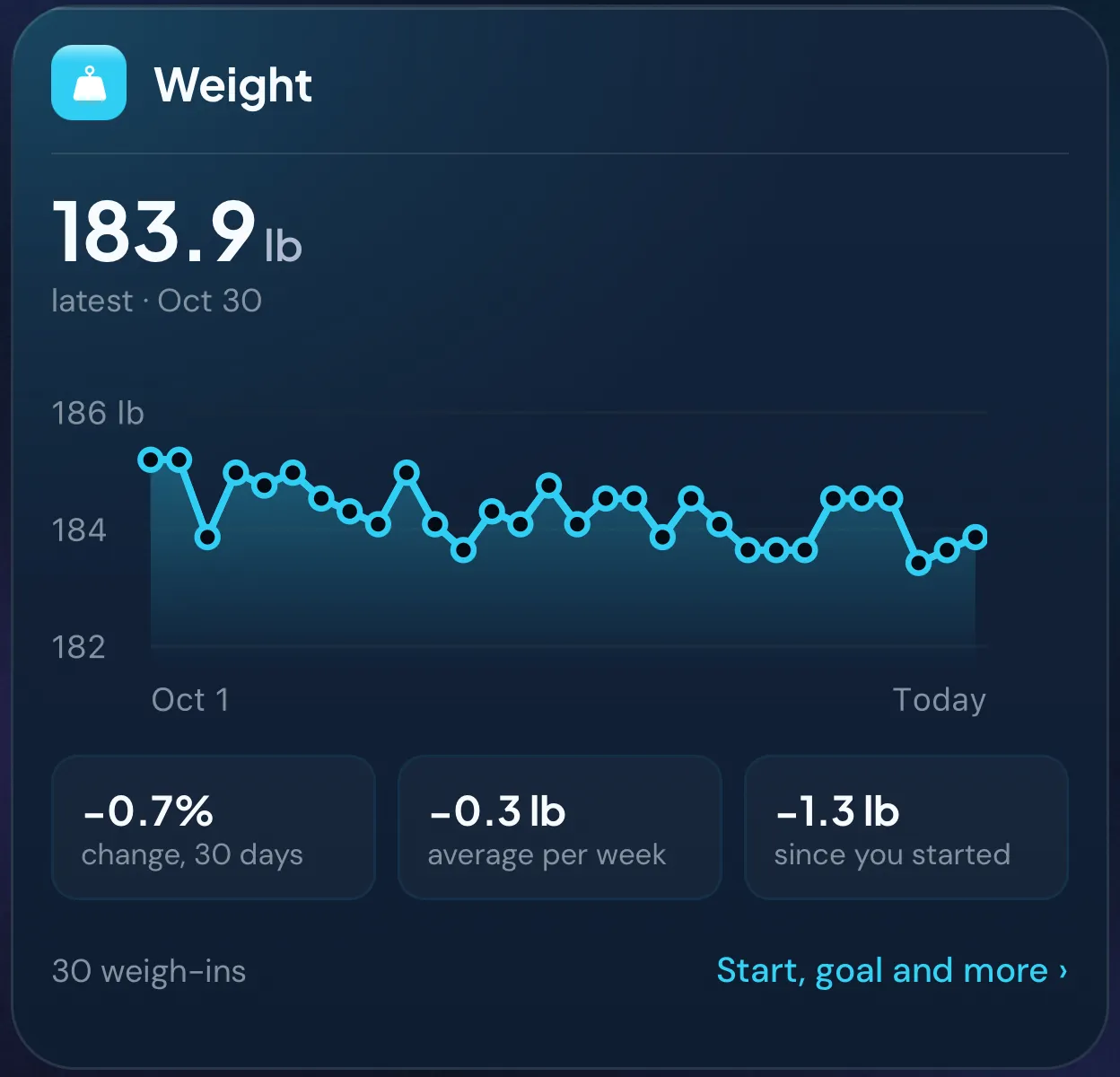
Peptimes is a private iPhone tracker for the compounds you already use, and it keeps the records this guide asks you to bring: each dose with its amount, route, injection site (for injections), and how you felt. Dose History lists every dose newest first, with search and a chip for each compound. Home and the Calendar let you record a dose you forgot and mark one you didn't take. The daily check-in records your weight and side effects with an intensity, plus notes, and Body Profile holds your body measurements. Insights shows your weight trend, where you've injected and how recently, and how you've been feeling.
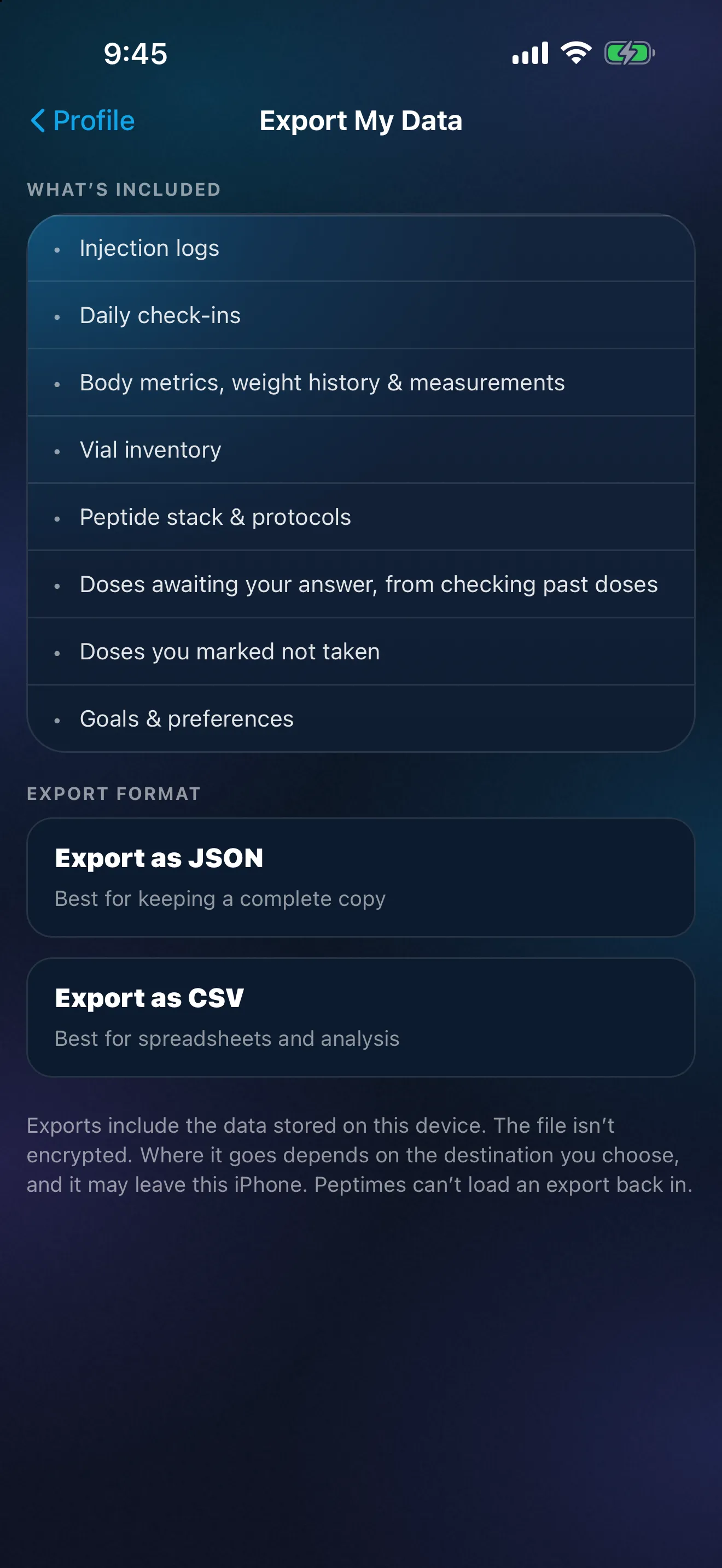
Before an appointment, Export My Data saves your records as a CSV or JSON file to share in whatever way the office prefers. Your health records are stored on your iPhone. Peptimes doesn't keep a copy of your records on its servers, so export your data to keep one. The steps are in share your medication log with your doctor.
Peptimes is coming soon to the App Store. If you track a GLP-1 medication, see the GLP-1 tracker; for testosterone, the TRT tracker. How Peptimes handles your data explains where your records are stored.
Sources
- National Institute on Aging (NIH), "How To Prepare for a Doctor's Appointment", checked 25 Oct 2026 (content reviewed February 3, 2020, as shown on the page): list and prioritize concerns, bring a medicine list or the medicines themselves, insurance cards and other doctors' contacts, consider bringing a companion, report changes since the last visit.
- U.S. Food and Drug Administration, "Create and Keep a Medication List for Your Health", checked 25 Oct 2026 (content current as of 01/08/2025, as shown on the page): what a medication list contains (prescription and over-the-counter medicines, vitamins, supplements, name, strength, purpose, instructions, allergies, emergency contacts) and keeping it current.
- Agency for Healthcare Research and Quality (HHS), "The 10 Questions You Should Know", checked 23 Oct 2026 (content last reviewed November 2020): the question about interactions with medicines you already take, and asking how a drug's name is spelled.
- Peptimes, Help Center, "Didn't take a dose, or forgot to log one", checked 25 Oct 2026: recording a dose you forgot and one you didn't take.
- Peptimes, Help Center, "Export your data", checked 25 Oct 2026: what an export includes.
Coming soon to the App Store
See planned pricing